

Author:
Željko Jagušt
Publish Date:
December 12, 2021
Estimated Reading Time:
7 minutes
I got my first computer back in 1987. It was an old Commodore 64 with a tape unit and a German manual. If I tell you the release date of the Commodore 64 was August 1982, and it was still relevant in 1987… yeah, back in the days, once you had a computer, you used it for years. Why? Well, first of all, the choice was limited, and computers were still considered a luxury.
Desktop, Laptop, Tablet…
Computers come in many different shapes and sizes in today’s modern era. While this can be confusing, don’t worry; everything becomes more apparent if you know the purpose. For instance, you will not buy a powerful Desktop tower if you are a casual user browsing the internet and watching movies. If you are in retail and own a small shop, you can choose between a cheap laptop, an all-in-one desktop, or even a tablet. It will be more than enough to run a POS software and an email client, but not much more.
If you are in a “general” business, like state administration, banking, insurance, or similar, you can opt for a mid-range workstation. It can be either a desktop or a laptop, but consider a bit more power regarding CPU, RAM, and storage. Especially storage. Working in the IT industry, architecture, graphics editing, engineering, or similar will require even more powerful computers. We are talking about computers with fast and powerful CPUs, lots of RAM, and a dedicated graphics adapter optionally. For instance, if you are in graphics or developing applications for IOS, you should consider Apple computers. They are a “native” platform for such work and will give you the best results.
Gaming is something that will also require a powerful computer with the accent of a decent graphics adapter. Such computers are usually custom-built and cost a lot of money. Alternatives are gaming consoles like PlayStation or Xbox.
Low-end Computers
There are two main reasons why you should opt for a low-end computer. Either your needs are elementary, or you have a limited budget. Computers in the low-end range will usually cost between 300 – 400$, and they are limited to running a few simple tasks simultaneously. And nothing more. Good examples of such computers are cheap tablets, all-in-one desktops, and Tier-1 notebooks.
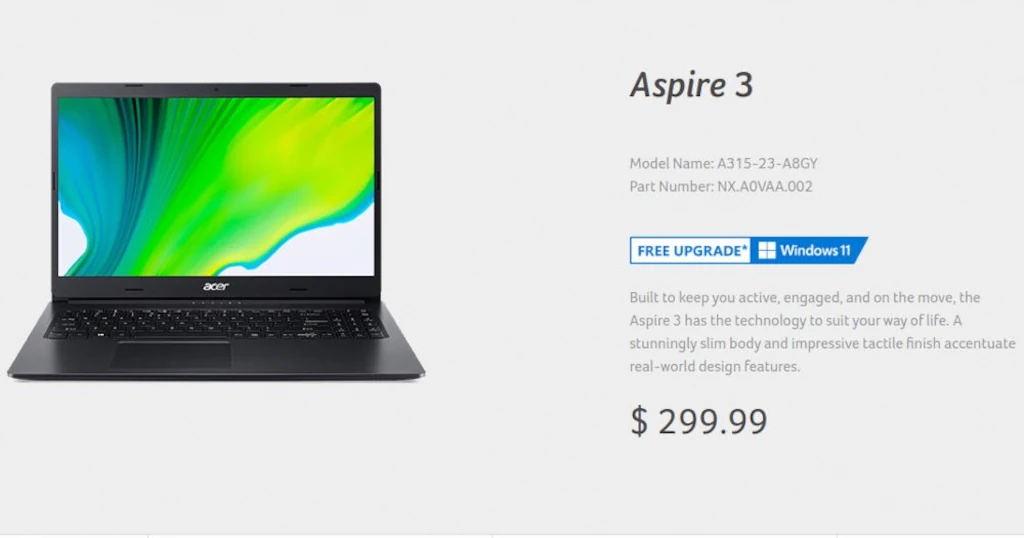
Source: acer.com
Hardware Options
You will not get much here. Also, you have to be aware that the operating system itself will probably use up to half (or more) of the available memory. This will leave you with minimal resources for anything else, so the purpose is essential here.
-
PROCESSOR
-
MEMORY
-
NETWORK
-
STORAGE
- Intel Celeron/Pentium series or entry-level i3 processors
- AMD Athlon or entry-level Ryzen 3 processors
- 4 – 6 GB
- Basic built-in Wi-Fi adapter
- 512 GB – 1 TB capacity
- Single mechanical HDD or entry-level SSD
Usage
Here are a few examples where low-end computers will serve their purpose:
- Entertainment
- Browsing the internet, watching a movie, or playing music in the background – perfect! However, too many tabs in the browser will deplete your memory, so be aware of that.
- Small Retail Business
- Running any POS software for a small retail business with an email client open in the background will work just fine. Cheap tablets are perfect for this.
- Writing/Blogging
- If you’re an author, writing a book, or blogging, text editing will not be problematic for such machines.
- Photo Editing
- Simple photo editing and storage for the same will also work. And I’m not talking about Photoshop or similar advanced graphics software here.
I hope you got the idea. And yeah, one more thing worth mentioning here. Custom building a low-end computer makes absolutely no sense. It takes too much time, and in the end, the cost will be much higher than just buying a Tier-1 computer from well-known vendors like Lenovo, HP, Dell, Acer, and similar. Be smart and be straightforward here, both with your needs and expectations.
Mid-range Computers / Workstations
Consider computers in this category as “workhorses” of our modern era. Along with running basic operations and programs like internet browsers, email clients, and office applications, they are built to run one or more specific complex operations or applications. Usually, computers in this category are a popular business environment choice. The price range varies a bit more here. Expect prices between 800$ up to 1500$ for a mid-range computer. Consider well-known and industry-established vendors when opting for such a computer. I’d recommend Lenovo, Dell, and HP.
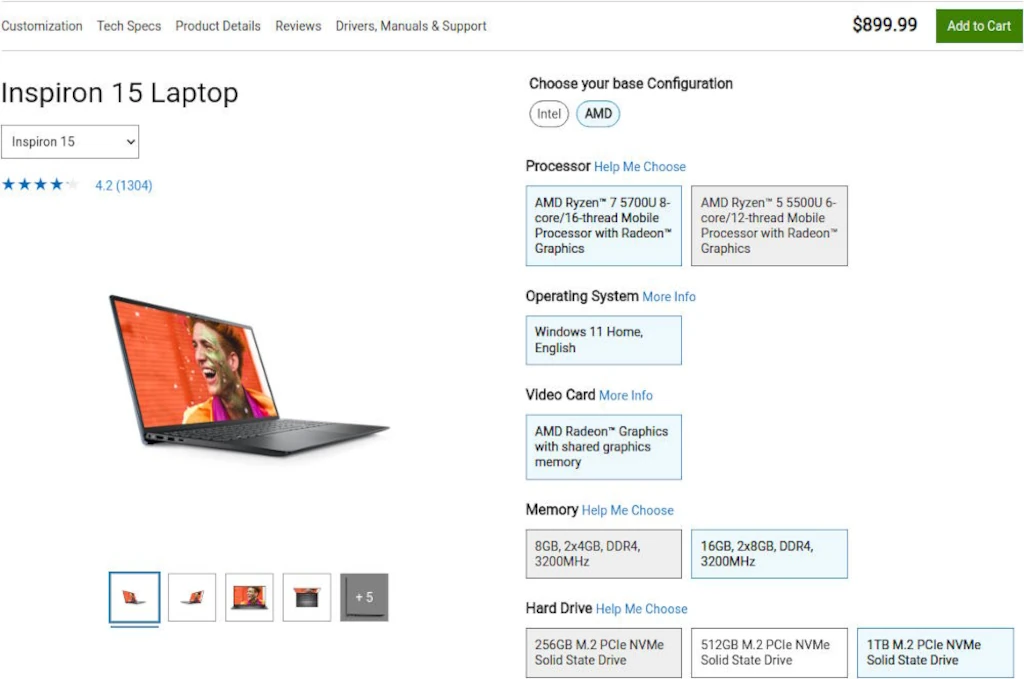
Hardware Options
With bulkier hardware, you will be able to run multiple applications simultaneously. If you opted for multiple displays, you could run your basic applications (like a web browser, email client, chat client, and similar) on one screen and work-related applications on the other screen.
-
PROCESSOR
-
MEMORY
-
NETWORK
-
STORAGE
-
GRAPHICS
-
DISPLAY
-
OTHER
- Mid-range to entry-level high-end Intel i5 or i7
- Mid-range to entry-level high-end AMD Ryzen 5 or 7 series
- 8 – 16 GB
- Built-in Wi-Fi adapter
- Optional Ethernet adapter
- 512 GB – 1 TB capacity or more
- Single, entry-level SSD or PCIe NVMe drive
- CPU-based shared memory graphics
- Low-end to the mid-range dedicated graphics adapter
- It is recommended to consider adding an additional display as an option
- A wide variety of additional ports and cables/adapters
Usage
With more powerful hardware, usage options are considerably more significant. Here are a few usage examples for mid-range computers:
- Office Suite Advanced
- Office suites with accent on complicated spreadsheets, heavy rich-text file editing, and simple databases.
- ERP/Finance/Accounting
- Any ERP, finance, or accounting software.
- Banking/Insurance/Investment
- Mid-range computers are almost mandatory choices for banking, insurance, or investment companies.
- System Administration
- Well suited for remote and on-premises work in system administration and DevOps.
- Simple to intermediate coding
- With slightly higher-end hardware, they are also good for coding and not too heavy compiling.
It also makes no sense to custom-build a mid-range computer like low-end computers. The reasons are the same: it takes too much time and is too costly. Just go with the business-proven vendors, and you will be fine.
High-end Computers / Gaming Rigs
If you pay over 2000$ for a computer, that can be considered a high-end computer. Usually, computers like this are flagship products of well-known vendors or custom-built solutions. And you can do virtually anything on such computers. But, be aware of one fact. A high-end computer today will become a low-end one during a specific period. So it is of utmost importance that investment in such hardware is justified 100%. If the purpose of such a computer is your work, ensure that the return value is much greater than the investment in hardware. For gaming, make sure you make at least some money from it, or if you are a casual gamer, it is better to invest in one of many gaming consoles. It is much cheaper. But then again, as with everything else, the money is yours.
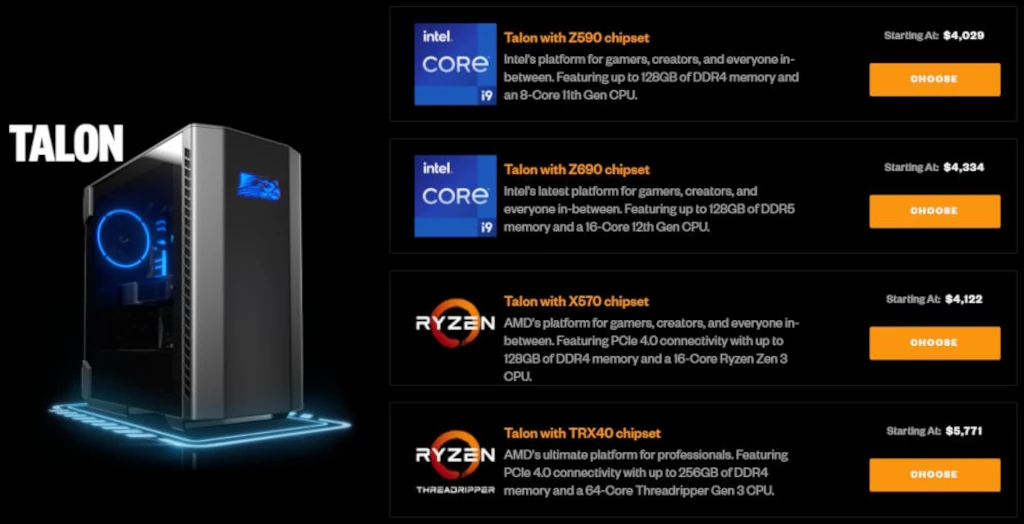
Hardware Options
Computers in this category are completely custom-built, whether you buy one from a well-known vendor or build it yourself. Thus, there is no limit when discussing hardware options.
-
PROCESSOR
-
MEMORY
-
NETWORK
-
STORAGE
-
GRAPHICS
-
DISPLAY
-
OTHER
- Latest generation top-level Intel i7/i9 Extreme edition
- Latest generation top-level AMD Ryzen 9 and Zen 3 Threadripper
- Anywhere between 32 GB and 256 GB
- Fastest top-level Wi-Fi adapters
- Low-latency Ethernet adapters
- Separate operating system and data disk arrays (usually RAID-10)
- Virtually unlimited storage capacity (4TB and more)
- Top-shelf SSD and PCIe NVMe drives
- Flagship GPU dedicated adapters by both Nvidia and AMD
- Computers like this usually come with high-resolution, top-of-the-line LCD or OLED displays.
- Multiple displays are common here
- A wide variety of additional ports and cables/adapters
- A wide palette of premium I/O devices (keyboards, mice, speakers, etc.)
Usage
High-end computers are highly bulky regarding hardware, and possibilities are virtually endless. Of course, it all depends on how large your budget is. Other than gaming, you will not find such computers in many business environments, but there are cases:
- Design, Architecture, and similar
- Industries that use CAD or 3D modeling software include architecture, game design, and various engineering-based industries, such as the automobile industry, avionics, etc.
- Advance graphics design
- Advanced graphics design where Adobe or a similar range of software suites are required.
- Software development
- Heavy coding requires powerful hardware to compile the code. I’m talking about coding, such as Linux kernel and operating system development.
You can opt here for the flagship products of well-known vendors like Lenovo, Dell, or Apple for business and Alienware and Falcon Northwest for gaming, or you can ask for a custom-built solution.
